Grid-Scale Storage That
Finally Makes Renewable
Energy Reliable
We build hybrid non-aqueous redox flow batteries with near-lithium energy density, zero fire risk, and a 40-year lifespan. Grid-scale storage that finally makes renewable energy reliable.

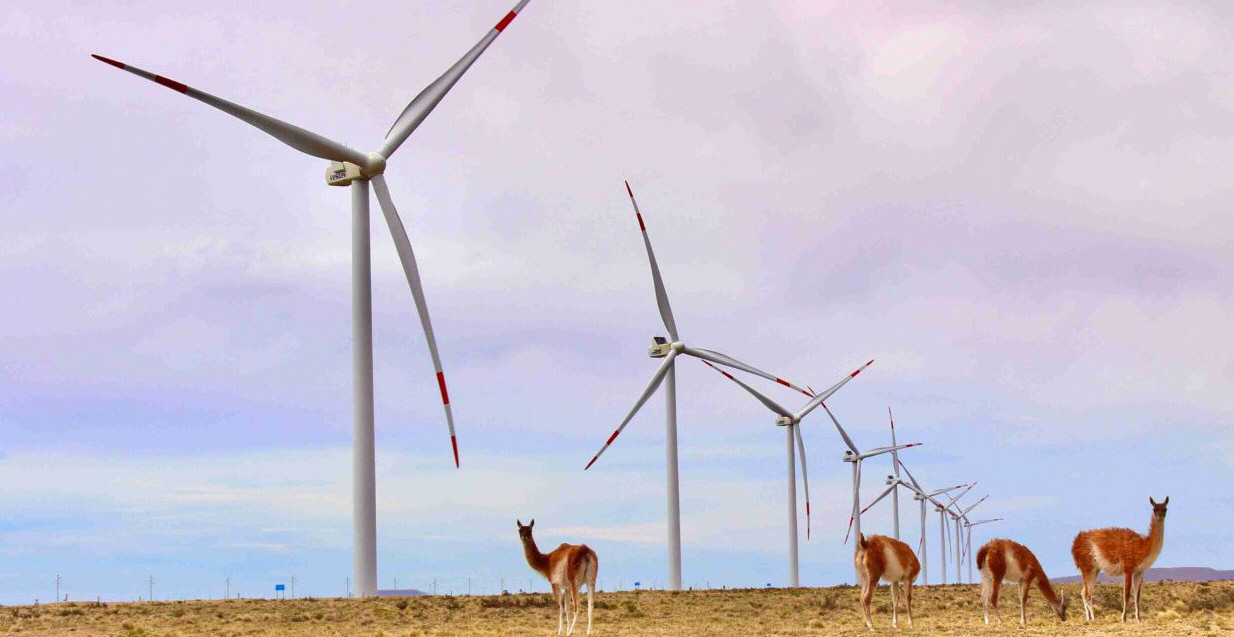

The world needs 25× more energy storage by 2030. Lithium can't get us there.
Li-ion degrades fast, catches fire, and depends on scarce minerals. The grid needs something fundamentally different.
Storage Gap
Global LDES must grow 25× by 2030 (IEA). The grid loses billions in curtailed renewable energy daily because there's nowhere to put it.
Wrong Chemistry
Li-ion degrades fast at deep cycling and needs full replacement every 8–10 years. There isn't enough lithium on Earth for all the storage the world needs.
Fire Risk
Li-ion has inherent thermal runaway risk. Insurance premiums for grid-scale Li-ion are rising 15–30% annually. Permitting near populated areas is increasingly difficult.
Inside a 1 MWh Carbo storage module
A single containerized unit rated at 250 kW and 4 hours of duration. Non-pyrophoric. No thermal management. Fits in a standard shipping container.
Anolyte Tank
Non-pyrophoric. Tolerates 50,500 ppm water. No glovebox needed.
Cell Stack
Power is decoupled from energy. Add tanks for more storage, not more cells.
Catholyte Tank
Multi-electron chemistry enables near-lithium energy density in a flow format.
PCS & Grid Connection
Standard 20ft container houses the complete system. Plug-and-play grid connection.
Three forces creating a $186B+ market
Exponential Growth
AI-driven datacenter demand is adding 35+ GW of load to US grids by 2030. Every datacenter needs 4–12 hours of backup storage.
Renewable Waste Crisis
30–40% of solar/wind energy is curtailed because there's no storage. Storage unlocks this stranded value — buy at $0–20/MWh, sell at $80–200/MWh.
What if you could build a battery with 1/3 lithium density, a higher ROI, zero fire risk, and a 40-year lifespan?
A hybrid non-aqueous redox flow battery with breakthrough energy density
Our architecture pairs a chloroaluminate ionic-liquid-analogue anolyte with a multi-electron phenothiazine catholyte in a diglyme medium. Validated in laboratory with >8,000 charge cycles at <0.2% capacity fade per cycle.
Anolyte: AlCl₃:N-ethylurea
Chloroaluminate ionic-liquid analogue at 1.4:1 molar ratio. E° = −1.66V vs SHE. Massive electron inventory (20.64 mol e⁻/L). Non-pyrophoric, tolerates water.
Catholyte: Phenothiazine-OEG
Ether-functionalized phenothiazine with FTFSI counteranion. 2-electron redox (E° = +1.18V vs SHE). Enables 2.84V cell voltage — 2× higher than vanadium flow batteries.
Solvent: Diglyme
Non-aqueous medium that enables the high voltage window. Compatible with both electrode chemistries. Commercially available at scale.
Active materials: $126/kWh · Installed CAPEX: $183/kWh · LCOS (20yr): $0.08–0.10/kWh · Validated in laboratory.
Why Carbo beats lithium at every duration beyond 4 hours
| Metric | Carbo Energy | Li-ion (LFP) | Vanadium RFB |
|---|---|---|---|
| Cell Voltage | 2.84 V | 3.2 V | 1.4 V |
| Energy Density | 190–200 Wh/L | 250+ Wh/L | 25–40 Wh/L |
| Optimal Duration | 8–100+ hours | 2–4 hours | 4–12 hours |
| Cycle Life | >8,000 cycles | 3,000–5,000 | 15,000+ |
| Degradation | 0.2%/yr | 2–3%/yr | <0.1%/yr |
| Augmentation (Yr 8–10) | $0 | $12–18M | $0 |
| 20-Year TCO (120 MWh) | $22M | $48–64M | $42–60M |
| LCOS (20 yr) | $0.08–0.10/kWh | $0.15–0.25/kWh | $0.12–0.18/kWh |
| Safety | Non-pyrophoric | Thermal runaway risk | Non-flammable |
| Supply Chain | Abundant, local | Critical minerals | 85% China/Russia |
| Life Extension | Electrolyte refresh → 40 yr | Full replacement | Electrolyte refresh |
Li-ion degrades 2–3%/yr at daily deep cycling → needs $12–18M cell replacement at Year 8–10 → again at Year 15. Carbo: 0.2%/yr ≈ 96% capacity at Year 20. Electrolyte refresh at Year 20 extends life to 40 years.
Modular architecture.
Add tanks, not cells.
Configure your system — 10 MW power, variable duration
Cost model: $6.5M fixed power infrastructure (10 MW stacks + PCS) + $129/kWh variable (electrolyte + tanks + BOS). Installed cost includes 20% margin. No thermal management costs. Zero fire risk insurance premium.
Why Flow Beats Lithium at Scale
Decoupled power & energy
Power is set by the cell stack, energy by the tank volume. Scale storage without scaling hardware.
No degradation trap
0.2%/yr degradation vs 2–3%/yr for Li-ion. At Year 20, Carbo retains 96% capacity. Li-ion is dead.
Electrolyte refresh → 40 years
At Year 20, refresh only the catholyte ($4–6M). Total 40-year TCO: $26–28M vs $48–64M for Li-ion.
Infrastructure conversion
Repurpose decommissioned oil tanks and closed gas stations. 1 tank of 5,000 m³ = 950 MWh of storage.
No degradation trap.
No operational handcuffs.
Use your battery as much as you want, at any state of charge. With 0.2%/yr degradation and electrolyte refresh at Year 20, a single Carbo system delivers over 3× the lifetime energy of a comparably-sized lithium battery.
Assumptions: 10 MW / 120 MWh system, 1.5 cycles/day avg, 100% DoD, 365 days/year. Carbo: 0.2%/yr degradation, catholyte refresh at Year 20 restores full capacity. Li-ion: 3%/yr degradation at daily deep cycling, EOL at Year 10. Li-ion replacement cost of $12–18M not included.
Four high-value markets,
one modular platform
Grid-Scale Storage & Energy Trading
Buy power at $0–20/MWh (night/solar peak), sell at $80–200/MWh (evening peak). 12h duration captures full spread curve.
Datacenter Backup & Baseload
AI datacenters need 4–12h uninterruptible power. Our non-pyrophoric chemistry eliminates fire risk insurance premiums.
Mining Operations (Off-Grid)
Replace diesel generators at remote lithium, copper, gold mines. 120 MWh system replaces ~$3.5M/yr in diesel fuel. Zero emissions.
Solar/Wind Farm Co-location
Store excess renewable generation, sell during high-price windows. Eliminates curtailment losses.
Every closed gas station.
Every idle oil tank.
Becomes an energy hub.
Repurpose fossil fuel infrastructure into clean energy storage
Closed Gas Station → Energy Node
Underground tanks: 3–5 tanks × 30,000–50,000 L = 90,000–250,000 L. At 190 Wh/L → 17–47 MWh per station.
Decommissioned Oil Tank → Grid Battery
Standard oil tank: 5,000–50,000 m³. At 190 Wh/L → 1 tank of 5,000 m³ = 950 MWh of storage.
Multiple layers of protection around our core innovation
Proprietary Electrolyte Chemistry
Optimized chloroaluminate anolyte and phenothiazine catholyte formulations. Patent pathway for multi-electron system architecture.
>8,000-Cycle Validation Dataset
Extensive lab data on electrochemical stability, capacity fade, and safety. Proprietary computational models validated in laboratory.
University Partnership
NDA-protected research collaboration. Co-development of next-gen catholyte formulations and pilot deployment near datacenter corridor.
CarboOS Software Platform
AI-driven battery management trained on real data. Predictive maintenance and energy arbitrage optimization for autonomous operation.
Prototype → Pilot → Commercial
Global Pilot
- ▸1 MWh pilot with Utility partner (Europe/Asia)
- ▸Validate full system integration
- ▸Demonstrate performance for international scaling
US Entry & Large Scale
- ▸10–120 MWh system for AlmaSADI (Argentina)
- ▸1 MWh US pilot at University of Nevada, Reno
- ▸First revenue from utility-scale infrastructure
Commercial Scaling
- ▸Multi-site deployments for Datacenters & Oil infra reuse
- ▸Establish US operational HQ and local BD team
- ▸Target: $15M+ revenue run rate
Grid Independence
- ▸100+ MWh LDES systems in ERCOT/CAISO markets
- ▸Commission first local manufacturing facility
- ▸Target: $50M+ ARR and global expansion
A world where every kilowatt of renewable energy is stored, not wasted
Carbo Energy is building the storage infrastructure the planet needs. Safe. Durable. Affordable. Built to last a lifetime.